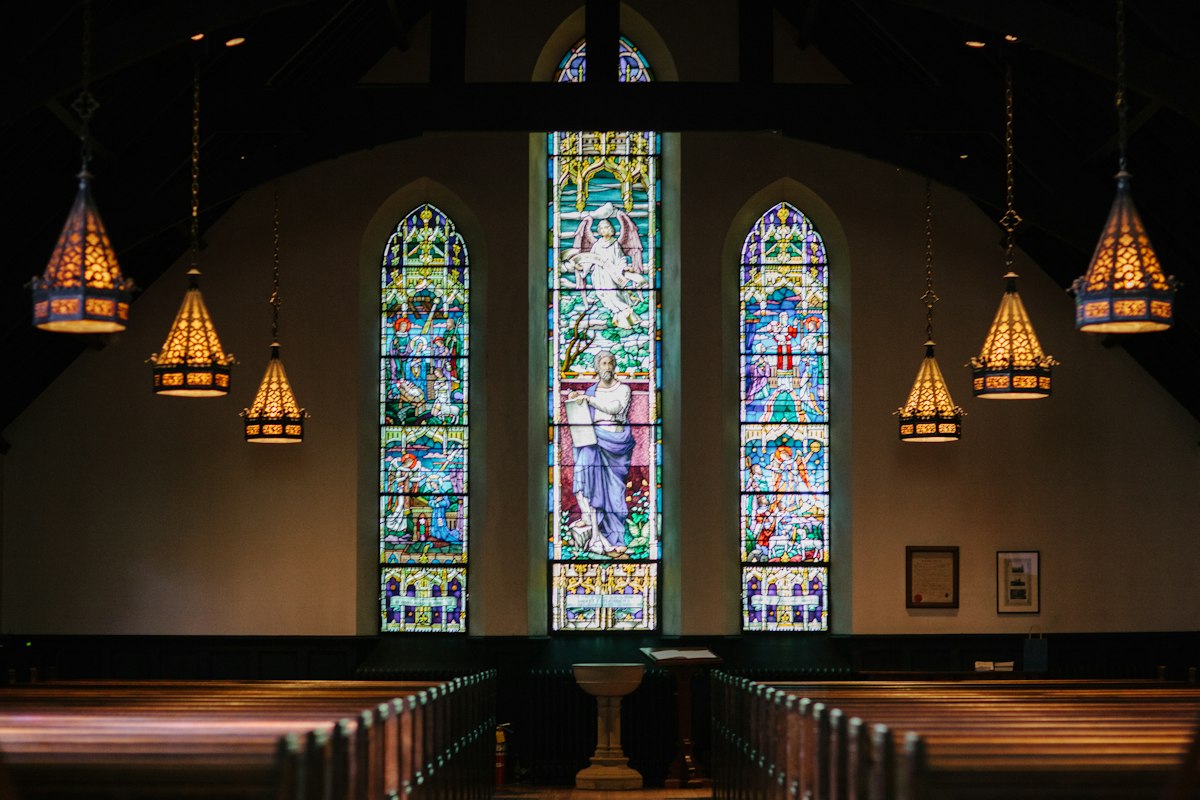
Every pastor knows the feeling. You scan the sanctuary on Sunday morning and notice the empty seats where familiar faces used to be. The Johnsons haven't been here in six weeks. Maria stopped coming after Easter. That young couple who seemed so excited during their first visit never returned. It's not just a numbers problem — it's a shepherding concern that weighs on your heart.
The truth is, people drift away from church for dozens of reasons, and most of them have nothing to do with anger or theological disagreement. Life gets busy. Schedules shift. A season of illness or discouragement quietly pulls someone away. That's why having a thoughtful church re-engagement strategy isn't about filling seats — it's about caring for the people God has entrusted to your community. And increasingly, one of the most effective ways to reach those drifting members is through something they check over 90 times a day: their phone.
Text-based reconnection plans offer churches a personal, low-pressure, and remarkably effective way to say, "We see you, we miss you, and there's always a place for you here."
---
Why People Quietly Leave (And Why They Rarely Tell You)
Before we talk about how to reach out, it helps to understand why people disengage in the first place. Research from the Barna Group and Lifeway Research has consistently shown that the majority of people who leave a church do so gradually — not dramatically. There's rarely a single event. Instead, there's a slow fade.
Common reasons include:
- Life transitions — a new job, a move across town, a new baby, or a change in work schedule
- Personal struggles — depression, marital difficulties, financial stress, or grief
- Feeling disconnected — never finding a small group, not knowing anyone beyond surface-level greetings
- Unresolved hurt — a misunderstanding with another member, feeling overlooked, or an unanswered prayer for help
- Spiritual dryness — a season of doubt or apathy that makes Sunday mornings feel like going through the motions
Here's what's striking: a Lifeway study found that 63% of people who stopped attending church said nobody from the church reached out to them. That's not a theology problem. That's a communication problem. And it's one we can address.
---
The Power of a Simple Text Message

You might wonder why texting, specifically, is so effective for reconnection. The answer lies in how people actually communicate today.
- Text messages have a 98% open rate, compared to roughly 20% for email
- 90% of texts are read within 3 minutes of being received
- Texting feels personal and conversational, not institutional
- It doesn't require someone to answer a phone call they're dreading
- It meets people where they already are — on their phone, throughout the day
For someone who feels embarrassed about being away or anxious about returning, a warm text message is far less intimidating than a phone call or a knock on the door. It gives them space to respond on their own terms while still communicating that someone cares.
This is why text-based outreach should be a cornerstone of any modern church re-engagement strategy.
---
Building a Text-Based Reconnection Plan: Step by Step
A reconnection plan doesn't need to be complicated. In fact, simpler is better. The goal is to create a consistent, grace-filled rhythm of outreach that feels natural — not automated and cold.
Step 1: Identify Who Has Drifted
Start by establishing a system for tracking attendance patterns. This doesn't need to feel clinical. Many churches use check-in apps, small group rosters, or even a simple spreadsheet where ministry leaders note when regular attendees have been absent for 2-3 consecutive weeks.
The key threshold to watch for:
- 2 weeks absent — worth noting internally
- 3-4 weeks absent — time for an initial personal text
- 6-8 weeks absent — a more intentional follow-up sequence
- 3+ months absent — a longer-term reconnection effort
Step 2: Assign the Right People to Reach Out
The person sending the text matters enormously. A message from a generic church number feels very different from a text from a small group leader, a familiar volunteer, or a pastor who knows your name. Whenever possible, have someone with a real relationship send the message.
If that's not possible, a staff member or trained care team volunteer can step in — but always with a personal tone, never a template that reads like a mass mailing.
Step 3: Craft Messages That Reflect the Heart of Your Church
This is where many churches stumble. The difference between a reconnection text that works and one that falls flat is almost always about tone.
---
What to Say (And What to Avoid) in Reconnection Texts
Let's get practical. Here are examples of effective reconnection messages at different stages, along with what to steer clear of.
Week 3-4 (First Touch):
"Hey Sarah! Just wanted you to know I've been thinking about you. We've missed seeing you on Sundays. No pressure at all — just wanted you to know you're loved and there's always a seat for you. Hope you're doing well! — Pastor Mike"
Week 6-8 (Second Touch):
"Hi Sarah, checking in again. If there's anything going on that we can pray about or help with, I'd genuinely love to know. You matter to this community, whether you're here every week or going through a season of rest. 💛 — Mike"
Month 3+ (Longer-Term Reconnection):
"Sarah, I know it's been a little while, and I just want you to know — the door is always open and there's zero judgment. We have some new things happening this fall that I think you'd really enjoy. Would love to grab coffee sometime if you're up for it. — Mike"
What to avoid:
- ❌ Guilt-driven language: "We noticed you haven't been tithing..."
- ❌ Passive aggression: "We haven't seen you in a while. Everything okay?" (This can feel accusatory)
- ❌ Overly formal or corporate tone: "This is an automated message from First Community Church..."
- ❌ Asking for something before offering care: "We need volunteers for VBS — can you help?"
The guiding principle is simple: lead with love, not attendance goals.
---
Creating a Culture of Reconnection, Not Just a System
A church re-engagement strategy only works if it flows from a genuine culture of care. If your church only reaches out when someone has been gone, people will feel managed rather than loved. But if reconnection is part of a broader rhythm of communication — celebrating, encouraging, and checking in consistently — then a "we miss you" text feels like a natural extension of a relationship that already existed.
Here are practical ways to build that culture:
- Train small group leaders to notice absences and reach out within their groups
- Equip greeters and ushers to relay observations to pastoral staff ("I haven't seen the Hendersons in a few weeks")
- Celebrate returns warmly but without drawing awkward attention — a quiet "I'm so glad you're here" goes a long way
- Normalize absence without ignoring it — people need to know it's okay to have hard seasons and still come back
- Use regular text communication for encouragement, prayer, and updates so that reconnection messages don't feel out of the blue
When people are accustomed to hearing from your church via text in positive, uplifting ways, a reconnection message feels like hearing from a friend — not getting flagged by an institution.
---
Timing and Frequency: How Often Is Too Often?
This is a common concern, and it's a valid one. You don't want to overwhelm someone who may already be dealing with a lot. Here's a general framework:
- First text — 3 to 4 weeks after last attendance (warm, casual, no expectations)
- Second text — 2 to 3 weeks after the first, if no response (slightly more intentional, offering prayer or help)
- Third text — 3 to 4 weeks later (invitation-oriented, perhaps mentioning a specific event or opportunity to reconnect)
- Quarterly check-in — if there's still no response, shift to a quarterly rhythm with a brief, loving message
If someone asks you to stop reaching out, honor that immediately and graciously. Respecting boundaries is itself a witness to the character of Christ.
A good rule of thumb: if you wouldn't feel comfortable saying it face-to-face to someone you care about, don't send it as a text.
---
The Spiritual Foundation Behind Reconnection
It's worth pausing to remember why this matters beyond strategy and communication best practices. Jesus told a story about a shepherd who left ninety-nine sheep to find the one that wandered away (Luke 15:4-7). He didn't wait for the sheep to come back. He went looking.
A church re-engagement strategy rooted in texting is simply a modern expression of that ancient impulse. It's the shepherd's heart translated into the language people actually speak today. Every text you send to someone who has drifted is a small act of faithfulness — a digital knock on the door that says, "You haven't been forgotten."
Not everyone will respond. Not everyone will come back. But every person who receives a caring, personal message knows that their church community was paying attention. And for many, that knowledge becomes the bridge they walk across when they're ready to return.
---
Start Reconnecting with the People You've Been Missing
If your church doesn't have a reconnection plan in place, start small. Identify five people who have drifted in the last month. Send each one a personal, warm text this week. See what happens. You may be surprised by how many people were just waiting for someone to reach out.
And if you're looking for a platform that makes text-based church communication simple, personal, and Christ-centered, Christ Unites was built specifically for this. It's designed to help churches stay connected to their people — not with corporate automation, but with tools that support genuine, relational ministry outreach.
Because every empty seat has a story. And sometimes, all it takes to start a new chapter is a single text message.