
---
Think about the last time you sent a text message. Chances are, the person on the other end replied within minutes. Now think about the last church-wide email you sent. How many people opened it? How many responded? The gap between those two experiences is exactly why two way texting for churches has become one of the most transformative tools for congregation engagement in recent years. For more details, see How to Segment Your Congregation for Targeted Text Campaigns.
Here's a reality every pastor knows: the hardest part of ministry isn't crafting a great sermon or planning a meaningful event. It's reaching people where they actually are. And in 2024, where people are is on their phones — specifically, in their text messages. Studies show that text messages have a 98% open rate compared to email's 20%, and most texts are read within three minutes of being received. For churches looking to deepen relationships and grow genuine engagement, that's not just a statistic — it's an open door.
But this isn't about blasting announcements into the void. The real power lies in the two-way part — creating conversations, not just broadcasts.
---
Why One-Way Communication Falls Short in Ministry
For decades, churches have relied on one-way communication: bulletins, pulpit announcements, email newsletters, and even one-way text blasts. These tools have their place, but they share a common limitation — they don't invite a response.
When someone receives a message and has no natural way to reply, they become a passive recipient rather than an active participant. Over time, this dynamic can quietly erode the sense of connection that makes a church feel like a community rather than an institution.
Consider these common frustrations church leaders face:
- Event attendance is unpredictable because people RSVP in their heads but never actually confirm.
- New visitors slip through the cracks because follow-up emails go unread or feel impersonal.
- Prayer requests get lost in long email chains or Facebook threads.
- Volunteers are hard to coordinate because group emails devolve into confusion.
- Pastoral care feels reactive rather than proactive because there's no easy way to check in.
These aren't technology problems at their core — they're relationship problems. And the solution needs to feel as natural and personal as a conversation between friends.
---
What Two-Way Texting Actually Looks Like in a Church Context
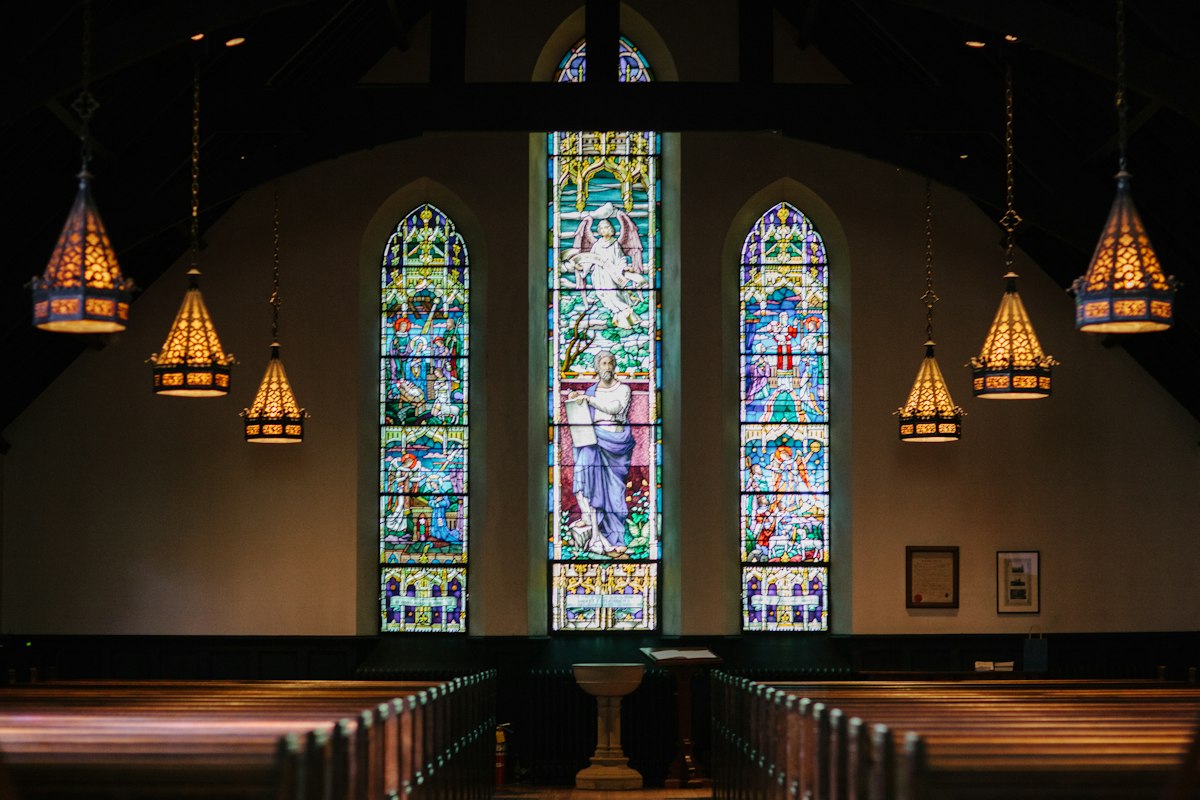
When we talk about two way texting for churches, we're describing something simple but powerful: the ability for your church to send a text message and receive a reply — creating a real, back-and-forth conversation.
Unlike mass texting service for churches blasts that go out with a "do not reply" tag, two-way texting opens a dialogue. A church staff member or volunteer can text a newcomer, and that newcomer can text right back. A pastor can check in on someone going through a hard season, and they can respond honestly, in their own time, from the comfort of their phone.
How It Differs from Social Media Messaging
You might wonder, "Can't we just use Facebook Messenger or Instagram DMs?" While social media has its place, it comes with significant limitations for church communication:
- Not everyone uses social media, especially older congregation members.
- Messages get buried in cluttered inboxes alongside ads and spam.
- Privacy concerns make some people uncomfortable sharing personal needs on social platforms.
- Algorithms control visibility, meaning your messages may never actually be seen.
Text messaging bypasses all of these barriers. It meets people on the one app every phone already has — no downloads, no accounts, no algorithms.
How It Differs from One-Way Text Blasts
One-way texting is like putting a flyer on a windshield. Two-way texting is like knocking on someone's door and having a conversation. Both have value, but only one builds relationship. The ability to receive and respond to replies transforms texting from a broadcast tool into a pastoral care tool.
---
Five Practical Ways Churches Are Using Two-Way Texting Right Now
The most effective churches aren't using texting as a gimmick — they're weaving it into the natural rhythms of ministry. Here are five real-world applications:
1. Following Up with First-Time Visitors
Within 24 hours of someone visiting your church, a friendly text goes out: "Hi Sarah! We're so glad you joined us at Grace Community this Sunday. Do you have any questions about our church? We'd love to help you get connected." Sarah can reply immediately, ask about small groups, and feel personally welcomed — all before Monday morning.
2. Coordinating Volunteers Quickly
Need to fill a last-minute slot in the children's ministry? Instead of sending an email that won't be read until Tuesday, send a text: "Hey team — we need one more volunteer for the 11 AM service this Sunday. Can anyone step in? Reply YES if you're available!" Within an hour, you have your answer.
3. Providing Pastoral Care and Prayer Support
A congregation member texts your church's prayer line: "Please pray for my mom. She's going into surgery tomorrow." A pastor or care team member can reply personally: "We're praying for your mom right now, David. Would you like someone to visit her at the hospital?" That exchange takes 30 seconds and communicates volumes about how much your church cares.
4. Gathering Honest Feedback
After a sermon series, event, or ministry initiative, a simple text can open the door to genuine input: "We just wrapped up our Foundations series. What resonated with you? What could we do better next time?" People are far more likely to respond to a text than to fill out a survey.
5. Sending Encouragement and Scripture
Sometimes the most impactful text isn't logistical at all. A midweek message like "Thinking of you today. 'The Lord is near to the brokenhearted and saves the crushed in spirit.' — Psalm 34:18. How are you doing this week?" can open a conversation that changes someone's entire day.
---
The Scriptural Heart Behind Conversational Ministry

Two-way texting isn't just a communication strategy — it reflects a deeply biblical pattern. Throughout Scripture, God doesn't simply broadcast commands from heaven and move on. He invites dialogue. He asks questions. He listens.
When God called out to Adam in the garden, He asked, "Where are you?" (Genesis 3:9). He already knew the answer. The question was an invitation to conversation, to relationship, to restoration.
When Jesus met people, He engaged them personally. He asked the blind man, "What do you want me to do for you?" (Mark 10:51). He sat with the woman at the well and had a long, winding conversation that changed her life.
Ministry has always been conversational. Two way texting for churches simply gives us a modern tool to continue that ancient, sacred practice of meeting people where they are and saying, "I see you. I'm here. Let's talk."
---
What to Look for in a Church Texting Platform
Not all texting platforms are built with churches in mind. When evaluating two way texting for churches, look for features that support the unique needs of ministry:
- Easy contact management so you can organize by small group, ministry team, volunteer role, or care need.
- Two-way conversation threads that allow multiple staff members or volunteers to see and respond to incoming messages.
- Keyword-based opt-ins (e.g., text "CONNECT" to your church number) so newcomers can easily join your communication.
- Scheduled messages for automated follow-ups, event reminders, and weekly encouragements.
- Privacy and compliance features that respect people's boundaries and follow texting regulations.
- Affordable pricing that fits a church budget — because every dollar matters when you're stewarding generously given tithes and offerings.
The right platform should feel intuitive, not overwhelming. Your volunteers and staff should be able to pick it up and start using it without needing a degree in technology.
---
Overcoming Common Hesitations About Church Texting
Some church leaders hesitate to adopt texting because they worry it will feel impersonal or intrusive. Those are valid concerns — and they're worth addressing directly.
"Won't people feel bothered by texts from our church?"
Not if you're thoughtful about frequency and content. The key is to text with purpose and always give people an easy way to opt out. Most people appreciate a well-timed, caring message far more than another email they'll never open.
"Our congregation skews older — will they even use texting?"
Actually, yes. According to Pew Research, 97% of Americans own a cellphone, and texting is the most widely used feature across every age group. Your 75-year-old church member may not use Instagram, but she almost certainly knows how to send and receive a text.
"We don't have the staff to manage conversations."
This is where the right platform makes all the difference. With templates, scheduled messages, and the ability to assign conversations to specific team members, even a small church with limited staff can manage two-way texting effectively. You don't need a communications department — you need a system that works with you.
---
Building a Culture of Connection, One Text at a Time
The churches that are growing in engagement today aren't necessarily the ones with the biggest budgets or the flashiest technology. They're the ones that have figured out something simple but profound: people want to be known.
They want to know that if they miss a Sunday, someone notices. They want to know that their prayer request was actually read by a real person. They want to feel like they belong to a community, not just an audience.
Two way texting for churches makes that kind of personal connection scalable without losing its warmth. It's not about replacing face-to-face ministry — it's about extending it into the spaces where life actually happens: between Sundays, during lunch breaks, in hospital waiting rooms, and in the quiet moments when someone just needs to know they're not alone. For more details, see TCPA Compliance for Churches: What Pastors Need to Know.
---
Start Meaningful Conversations with Your Congregation Today
Every text you send is an opportunity to say to someone in your congregation, "You matter. You belong here. We're glad you're part of this family."
If you're ready to move beyond one-way announcements and into genuine, life-giving conversations with your church community, Christ Unites is here to help. Built specifically for churches, Christ Unites gives you the tools to connect with your congregation through two-way texting that feels personal, natural, and Christ-centered.
Because at the end of the day, the technology is just a tool. The real work — the sacred work — is building the kind of community where no one gets overlooked and every person feels the love of God through His people.
Visit joinchristunites.com to learn how your church can start using two-way texting to deepen engagement and strengthen your community.